Showing posts with label regeneration. Show all posts

Monday, August 30, 2010

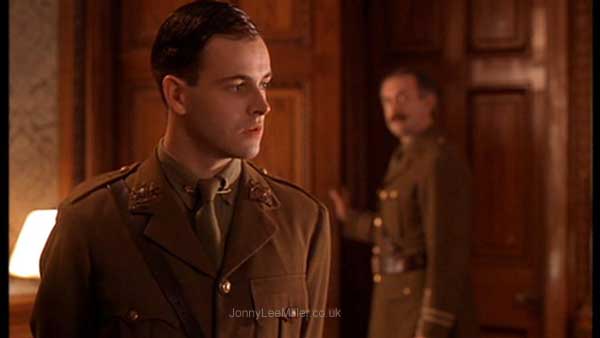
Sassoon's declaration: A sane man's words.

Sassoon’s declaration is fully justified and is coming from a sane mind, talking with experience. I find his reasoning for writing the declaration something I could empathize with, as I myself would protest against the massacre of innocent men for governments’ vengeance on one another, as cruelty and sin is not a reason to serve and die for your nation.

These men joined the war thinking they were protecting their nation from unlawful acts, but now find themselves contributing to the suffering and pain these men went through. Sassoon himself is a man of military background, but even his dedication for the army didn’t stop him realizing there was nothing left moral or liberating about the war.

He speaks of his traumatic experiences, and how he is aware that those at home may think they understand and could imagine what these soldiers have been through, but he also emphasizes that unless you have experienced it for yourself, you could not even begin to imagine the agonizing suffering these men go through.

I agree that those soldiers have been deceived and are being slaughtered like cows for reasons they are not to blame for, and Sassoon’s declaration was merely an act of good will, to try and save what is left of his fellow soldiers, as he knows what they have been through and has gone through it himself. He is not running away out of cowardly thoughts, but out of self preservation, as enduring the war anymore would only turn him to insanity.

Wednesday, May 13, 2009

'notorious' characters explored in the four IOP texts

All the novels feature ‘notorious’ characters. Is it positive or negative? Explain for each character.

Notorious in our opinion is used to describe someone who is ill-famed and known widely and usually unfavourably. The person described usually has unfavourable connotations attached to them. They are also known for bad conduct or disgrace.

In 'Regeneration' by Pat Barker, our group agreed that Sassoon can be identified as a 'notorious' character because he rebels against the government through his written declaration. He is portrayed unfavourably in the governments' eyes and is ill-famed to some extent. Through his insurgent poems, he gained popularity amongst his fellow fascists, thus proving him to be viewed also as 'notorious' in a positive way.

Another character which can be portrayed as 'notorious' is the infamous Dr. Yealland who gained his reputation of notoriety throughout the hospital due to his horrific treatment methods in which he inflicts on his patients thus making him 'notorious' in the eyes of his patients.

In 'Perfume' by Patrick Süskind, the protagonist, Grenouille, murders young, attractive virgins to obtain their exotic scent. However, he is only established as a 'notorious' person at the end of the novel as he was finally convicted of his murders then. Before that, he managed to keep a low profile, through his undetected scent and so was able to keep his murders hidden from the public. Grenouille's secret identity as a murderer classifies him as a 'notorious' character amongst the readers even before he was uncovered in the public eyes for his crimes. His notoriety is seen as negative before and after the discovery of his actions.

In 'Alias Grace' by Margeret Atwood, Grace Marks, the protagonist is depicted as a 'notorious' character through her reputation for killing. In the novel, she is labeled as a "celebrated murderess" (page 25). Her notoriety is inflated through her responses during her trials. She is a cunning and clever woman, and is deemed 'notorious' by choosing to keep her deeper thoughts hidden from the authorities.

- Anahita, Lillian, Mai & Yung

The Narrative Voice: Novels in Part 4

Written by: Truc, Chris, Nick and Rhys

Comment on the narrative voice of each text. How does it allow the audience to connect with the protagonist?

ALIAS GRACE
More than one narrative voice is present in this novel. It switches between Grace's first hand account, which is at times both dreamlike and lucid, and a third-person account focused on Dr. simon Jordan's perspective. The story is also told through a series of letters, ranging in writers from Dr Jordan, his colleagues, his mother, and even Grace herself.
Grace's first hand account is not reliable - at times we feel intimate with her because she admits things to the reader that Dr Jordan is not able to get out of her. However, sometimes her accounts of events are hazy and lacking in focus/detail, creating more confusion amongst the various newspaper articles, song lyrics and "first hand" accounts of the time. The narrative of Dr Jordan seems distant, as the parts of it that revolve around Grace seem more analytical and inquisitive than empathetic. It makes Grace seem like an object instead of a person.

TRUE HISTORIES OF THE KELLY GANG
This novel is told primarily from Ned Kelly's point of view, in what appears to be a long letter to his unborn daughter it is seperated into 13 bound parcels, each concerned with a different aspect of his life.
Ned's accounts are told with little punctuation and sometimes read as a series of thoughts that just "pop" into his head. This makes the reader feel closer to him - as if we are truly within the complicated realm of his mind. Each parcel starts with librarian's notes and detailed explanations of the appearance of each parcel (size, type of paper, etc) it helps to bring Ned Kelly to life, as the addtion of the notes makes one really feel as if the letters he writes are real.

PERFUME
This is an omniscient narrative, focused mostly on Grenouille but at times shifting into side stories of other characters who are affected by Grenouille. The narrator switches between showing the audience what goes in in Grenouille's mind, and then showing the audience the consequences of his actions. For example, towards the end of the novel when he is murdering everyone, Suskind chooses to look at it through the perspective of the villagers, revealing what a monster Grenouille is. However, when the narrator chooses to show the perspectives of people like Baldini, who use Grenouille, the reader feels sympathy because these people do not treat Grenouille as if he is a person. The language used is highly descriptive and sensory, in terms of the setting and the smells and emotions Grenouille experiences, by doing this, Suskind manages to create some sort of feeling for Grenouille's decisions and horrible crimes because of the rich narrative language.

REGENERATION
This, again, is a third person omniscient narrative that presents more than one viewpoint. each soldier has his own story told at various points throughout the novel - allowing the audience to connect with each one individually, understanding every facet of the plight of the soldiers. As well as this, there are large amounts of narrative that, though in third person, are detailed accounts of Rivers' thought process. Through Rivers, all of the characters within the story are linked together - his analysis of their psyche and experiences and questions about the practice of psychiatry and the morals of war allow deeper feeling and empathy for each character's situation, and the situation of the "broken soldiers" as a whole.

The Balance of Empathy and Revulsion

Do we have a balance of empathy and revulsion for each of the protagonists?
How is this feeling created by the writers?


Grenouille (Perfume):
In Perfume there is an imbalance of revulsion and empathy experienced towards the protagonist, Grenouille. However, there is a greater revulsion felt as the novel is written in first person, where the reader is exposed to all the protagonists thoughts and views. Grenouille is portrayed as more of a creature than a human, where his thoughts show little emotion and a rather detached nature. Not only this but to inflict harm apon another appears to give him pleasure amoung all other emotions and a drive to continue to murder and cause pain to others. Grenouilles talent of smell is also portrayed in such a manner as to suggest that it is partly revulsion and partly empathy as it displays his inhumman side which lacks emotion and a gifted side which ultimatly brings out the human in him, a gift which most humans envy. However, Grenouille also appeals to the readers empathy as he shares qualities and experiences that many others have been exposed to. These include mistreatment from a young age, being an orphan and his general position of loniness. Another quality of Grenouilles that people envy is his ability to make his own way, creating his own success without relying on others to do so for him. The empathy shown towards Grenouille is portrayed through the colloquial languge and the first person in which the novel is written as it creates a greater understanding of the protagonist in the simple yet affective language used but this language also exposes Grenouille in asense to to the simple use of the language.

Rivers (Regeneration):
In Regeneration, there is an imbalance in which emypathy is greater than the revulsion felt towards the protagonist, Rivers. This is portrayed through the other characters and how they appear to rely on Rivers as a 'father figure' in which he guides and assits them. Not only this but the context in which the novel is written in first person offers many different points of views of the other characters while the reader is able to enter their thoughts. Furthermore, the fact that Rivers has to deal with mentally affected soldiers of war is a traumatising occupation, one which requires alot of logical and restrained thinking on the doctor's be half. Not only this but his indepth undertanding of people and his morals and points on the suffering of man due to war also offers the reader an oppotunity to empathise with him. However, the fact that his method used to treat his patients is still an experiment appeals to the revulsion of the reader as it is as if he is experimenting on people which in affect then questions River's morals.


Ned Kelly (The True History of the Kelly Gang):
The reader feels empathy for Ned Kelly because of his problems with family and the way he is treated throughout his life by the people who should be looked up to, for example, his father. Ned has a strong sense of justice and strives to maintain this using his good morals. This makes the reader like the character so feel more inclined to understand him. Empathy is created in the True History of the Kelly Gang by the colloquial language used throughout the novel, making the reader feel familiar with the character. The flowing, unpunctuated language resembles the process of thought, making the reader feel he or she is inside Ned's mind. This closeness makes the reader feel as if he or she is intimately connected with the protagonist, causing feeling of empathy. Ned is an outlaw and this may cause revulsion if it were not for his reasoning behind breaking all the laws he does, which the reader empathises with. The treatment of him by the authorities shows that they are revolted by him and also his lack of status and education. However, this is not mirrored by the reader because of the negative way in which the officials are portrayed in the novel. Therefore, Ned Kelly brings about more empathy than revulsion, the unbalance shown in the way the reader has connected with him.

Grace Marks (Alias Grace):
Grace is portrayed as a a good person through the way she reacts to her difficult circumstances and all the friends that she makes. She works hard for her family and for herself and so empathy is created strongly in the novel. The writer tells Grace's story through her point of view, in first person, which allows the reader to her her thoughts and feelings. This lets the reader understand her actions because she justifies them in a completely human way. The reader trusts she is not guilty of murder throughout most of the novel simply because he or she knows her story and empathises with the hard times that she goes through, as he or she feels as if they experienced the events together with Grace. The protagonist is arrested for murder which causes revulsion in the characters around her. These characters all seem to change her mind as they cannot resist her good demeanor. The appearance of her split personality does generate some revulsion because this is not considered normal or possibly human, especially in those times. The other characters, however are perfectly happy to believe that Grace is possessed by a spirit because of their own spiritual beliefs. There is a question to as whether or not she is acting about he split personality and this would mean that she was lying about her story the whole time, or else still does not remember if she committed the murder or not. If it is the former then a strong sense of revulsion would be created as the reader feels betrayed, but this is only potential because it is never explained fully. Therefore, as it stands, there is a greater amount of empathy than revulsion in the novel.

Julia, Frances, Ruben

Saturday, December 13, 2008

Munitionette

She,

glittering like streetlamps, yellow

of  her skin, knocking them back

hand on her chin

Bold,

like glaring sunlight, beating

of her heart, so much life

within her


She,

of the world behind

the glass, so rippled and he ensnared

by the writhing Dead

Cold,

are the arms that tenderly try

to snuff out the joy

within her


Sunday, December 7, 2008

Character Study - Callan

Callan is a patient suffering from mutism who appears in the last few chapters of the novel Renegeration. Though a minor character, he shows that the experiences soldiers have during war not only pose physical problems but psychological ones as well. He is being treated by Yealland in a manner described as "inhumane" by Rivers - electroshock.

Page 226
Callan obviously heard the question but made no response. His eyes flicked from Yealland to Rivers, whom he looked up and down dispassionately. Yealland leant closer to Rivers and murmured, ‘Very negative attitude.’
Callan had broken down in April. He’d been employed behind the lines on transport at the time, perhaps because his nervous state was already giving cause for concern. While feeding the horses, he had suddenly fallen down, and had remained unconscious for a period of five hours. When he came round, he was shaking all over and was unable to speak. He hadn’t spoken at all since then. He attributed his loss of speech to heatstroke.

Analysis
Callan is a character who chooses to isolate himself from the others and refuses to cooperate with Yealland when it comes to treatment, as if he doesn’t want to be cured. He appears insolent and rebellious. The fact that he obviously heard the question shows that he still pays attention and somehow shows that he comprehends but he made no response, showing that he just doesn’t care or doesn’t think it’s worth communicating with Yealland. Callan looked Rivers up and down dispassionately, indicating that he stereotypes psychiatrists, possibly due to his experience and the resulting impression he gets of them – a negative sterotype, as if he’s saying ‘oh, not another one’. Rivers describes Callan as broken. He used to fight but was transferred to working behind the lines because his nervous state concerned others. This illustrates that he’s been emotionally affected by war not so severely that he needed treatment, so he was transferred. He fell down suddenly while feeding horses, which is a strange yet interesting way of breaking down. This was what caused him to become mute, and he blamed it on heatstroke. However, there may be a different reason behind his illness that he doesn’t want to share, therefore he easily attributed it to heatstroke.

Page 229
Callan was brought in. He looked indifferent, or defiant, though once he was settled in the chair his eyes shifted from side to side in a way that suggested fear.
Analysis
When Callan was brought in for treatment, he looked indifferent which suggests that he’s used to it and has gone through it many times before as if it was a routine. He also looked defiant which brings out his rebellious side and the unwillingness to cooperate. However, as soon as he was sat down he started showing signs of uneasiness or fear, indicating that even though he’s been through this many times before, he’s still truly afraid. This leads readers to become curious as to why Callan still chooses to ignore or reject treatment.

Page 230
It took an hour. Rivers during all that time scarcely moved. His empathy with the man in the chair kept him still, since Callan himself never moved, except once to flex the fingers of his strapped hands. At last he nodded. Immediately the electrode was removed, and after a great deal of effort Callan managed to say ‘ah’ in a sort of breathy whisper.
Analysis
It took an hour for Callan to finally give in to the treatment, demonstrating his resilience and strength and determination to resist. However, Rivers was empathising with Callan during treatment, meaning Callan must have been showing a lot of pain or indications of terrible suffering somehow, yet still remaining silent. This again emphasises his strength to resist while proving that he doesn’t want treatment. Readers may think he might not even want to be cured. However he does give up in the end, and nods. It took Callan a great deal of effort to even make a sound, but he still did it, showing how difficult it is for Callan to speak even though he can and will do so if he really must.

Page 238
And yet on the ward, listening to the list of Callan’s battles, he’d felt that nothing Callan could say could have been more powerful than his silence. Later, in the electrical room, as Callan began slowly to repeat the alphabet, walking up and down with Yealland, in and out of the circle of light, Rivers had felt that he was witnessing the silencing of a human being.
Analysis
Rivers reflects on what he witnessed of Callan’s painful treatment, stating that Callan was most powerful when he was silent. This shows the powerful effect of Callan’s silence and may be the reason why he wants to remain silent, because it is only then that he is truly listened to. Rivers says he felt like he was witnessing the silencing of a human being. This is true, as Yealland said so himself “You must speak, but I shall not listen to anything you have to say”. When mute, he is paid attention to. When talking, he won’t be listened to. This highlights the power of Callan’s silence, and therefore the power of himself as a person, and the effect it had on Rivers.

What other functions do you think this character has in the novel? Feel free to add any comments or responses :)

By May Doan & Lillian Teoh

Love Between Men

In Regeneration love/relationships between men is a theme which runs throughout the novel, and links closely to the theme of emasculation.

            “ ‘After all you’ve got this enormous emphasis on love between men – comradeship – and everybody approves. But at the same time there’s always this little niggle of anxiety. Is this the right kind of love?’” Page 204, middle of page.

            Rivers says this to Sassoon during his rounds on the night before Sassoon is to go see the Board. This quote highlights the difficulty in any sort of male-male relationship during the war. As a soldier, it is one’s duty to protect your fellow men, and to care for them. However, this camaraderie during wartime always carries some discomfort with it because there is such a thin line between what is and isn’t appropriate. This issue with male-male relationships could possibly cause feelings of guilt or confusion in men after they return from war, faced with the realities of civilian society.

            “Rivers had often been touched by the way in which young men, some of them not yet twenty, spoke about feeling like fathers to their men. Worrying about socks, blisters, food, hot drinks. And that perpetually harried expression of theirs. […] It was the look of people who are totally responsible for lives they have no power to save.” Page 107, middle.

            Despite social issues related to male-male relationships, the bonds formed in wartime between soldiers are extremely strong. The responsibility that they assume for the lives of their fellow men is an act of selfless responsibility somewhat on the level of a mother’s instinct to protect her children. Rivers’s reflects that these soldiers do not have the power to save their comrades. This emphasises the complete and utter selflessness of this “love” between soldiers – though the men must know that all the concern, care and protection in the world will not save their comrades in the end, they still feel bound to give themselves to the cause.

            “ ‘I didn’t seem able to feel…well, any of the things you were supposed to feel. It got so bad I used to walk all night sometimes. […] The book was a life saver. Because I suddenly saw that…I wasn’t just a freak. That there was a positive side.’

            […]

            ‘You know, I realise Ross’s caution probably seems excessive. To you. But I hope you won’t be in too much of a hurry to dismiss it. There’s nothing more despicable than using a man’s private life to discredit his views.’ ” Page 54/55, top of both pages.

            This is the first instance in Regeneration where we encounter a suggestion of Sassoon’s homosexuality, indeed, homosexuality in general. Neither Rivers nor Sassoon directly mention the subject at hand, rather, they tiptoe around the issue, not wanting to be blunt and straightforward. However, they both know exactly what they are talking about. Sassoon is speaking about The Intermediate Sex a book by Edward Carpenter, which addresses issues with homosexuality.


Carpenter believed that homosexuality was innate and should not be classed as a sin. A strong advocate of sexual freedom, Carpenter wrote several pamphlets on the subject including Sex Love and Its Place in a Free Society (1894), Women and her Place in a Free Society (1894), Marriage in a Free Society (1894) and Homogenic Love and Its Place in a Free Society (1895). 

George Merrill moved in with Carpenter at his home in Baslow. After the House of Commons passed the Criminal Law Amendment Act that made all homosexual acts illegal, Carpenter had to abandon his campaign for sexual tolerance. In 1908 Carpenter returned to this theme with his book Intermediate Sex. Although the book created a great deal of hostility it had a strong influence on literary figures such as Siegfried Sassoon, D. H. Lawrence and E. M. Forster. 

 (Source: http://www.spartacus.schoolnet.co.uk/TUcarpenter.htm)


            Though homosexuality is not directly addressed within the novel, it appears as an undercurrent when relationships between men are discussed. Reactions to homosexuality, even the mere suggestion of it were extreme during wartime. This is important to Sassoon’s personal development. Due to his homosexuality, he will always be an outcast, both in society and in the trenches. It can be argued that this will be more of an issue in the trenches than out of them. If Sassoon were openly homosexual, much of the camaraderie experienced between soldiers during war would not be permitted to him – fellow soldiers may have misunderstood his intentions when he showed concern or affection for them.

            Graves hesitated. ‘It’s only fair to tell you that…since that happened my emotions have been running in more normal channels […] The…only reason I’m telling you this is…I’d hate you to have any misconceptions. About me. I’d hate you to think I was homosexual even in thought. Even if it went no further.’ ” Page 199, middle.

            This revelation from Graves would have sent Sassoon into a confused state of mind, which is evidenced a few pages later when he next encounters Rivers. For someone as close to him as Graves to denounce homosexuality to Sassoon would have caused further conflict with Sassoon’s self image. If his best friend cannot accept it, who will? Sassoon’s homosexuality seems that it will always be a barrier that separates him from the outside world. This seems to frustrate him, and causes him to rebel against the secrecy surrounding homosexual individuals, leading Rivers to chastise him (page 55) and even lecture him like a father would (page 205). 

feel free to comment with any things I should add/change :) 

-Chris