The main character of the book is written about as if the author despises him and perhaps rightly so. However, Grenouille is so fascinating that the reader cannot help but be drawn to him.
Apart from his incredible sense of smell he has an uncanny ability to survive. Against all odds, Grenouille lives. The source of this life seems to come from pure will for when he experiences failure and loses hope, his life also starts to dwindle. This suggests that Grenouille is hardly a human being, but merely infallible will encased in the husk of one.
He rejects the human world, only using it to help him progress with his goals, and at one point fully withdraws into himself. He has no need for company as the only love he has is for himself and no other. He has no need for a god to worship because he is god enough on his own. This extreme vanity makes him both more despicable and more interesting.
In addition, everyone Grenouille makes contact with seems to end in one horrible way or another. If he was never alive, these people may just have survived for longer or else died happily. His unconcern with others does not reduce his effect on them.
The reader is led to view Grenouille as a sort of mythical creature with the power of immortality and incredible sense of smell with a complete apathy for all of humanity.

Friday, December 19, 2008

Monday, December 15, 2008
Saturday, December 13, 2008
Munitionette
She,
glittering like streetlamps, yellow
of her skin, knocking them back
hand on her chin
Bold,
like glaring sunlight, beating
of her heart, so much life
within her
She,
of the world behind
the glass, so rippled and he ensnared
by the writhing Dead
Cold,
are the arms that tenderly try
to snuff out the joy
within her
Thursday, December 11, 2008
Character Analysis : Lizzie.
Lizzie is a friend of Sarah Lumb in the novel. Hopefully by reading the analysis of the quotes below to do with Lizzie in this post you will be able to get a better idea of her character in Regeneration.
P 87 - "Lizzie was keeping the younger girls entertained with a string of stories." - Lizzie is older, confident and witty as she seems to be keeping her companions entertained.
P 89 - "Lizzie said "Howay, lasses, I think our Sarah's clicked." - Lizzie is not afraid to say things, she speaks her mind and tells it like it is. She is blunt and not afraid of judgement and so can be seen to be self-assured.
P 110 - "The others were talking about Lizzie's husband, who'd thrown her into a state of shock by announcing, in his last letter that he was hoping to come home on leave soon." - We also see a slight weakness in her, as her husband may be the only one that can bring her confidence down. Although her husband abuses her, she may be stronger now because of it when he is at war and not there. Lizzie has a tough exterior when she is with the girls, perhaps she has "toughened up" due to the abuse from her Husband. Lizzie likes to be independent and does not seem like the stereotypical "weak" female character on the exterior.
P210 - "She sniffed and remained silent, enjoying the moment of power." - She is self-assured and likes to know that she has an influence/power. Perhaps this is why she does not want her to come back (as well as the obvious fact that he abuses her) she likes to be in charge.
Lizzie is a friend of Sarah Lumb in the novel. Hopefully by reading the analysis of the quotes below to do with Lizzie in this post you will be able to get a better idea of her character in Regeneration.
P 87 - "Lizzie was keeping the younger girls entertained with a string of stories." - Lizzie is older, confident and witty as she seems to be keeping her companions entertained.
P 89 - "Lizzie said "Howay, lasses, I think our Sarah's clicked." - Lizzie is not afraid to say things, she speaks her mind and tells it like it is. She is blunt and not afraid of judgement and so can be seen to be self-assured.
P 110 - "The others were talking about Lizzie's husband, who'd thrown her into a state of shock by announcing, in his last letter that he was hoping to come home on leave soon." - We also see a slight weakness in her, as her husband may be the only one that can bring her confidence down. Although her husband abuses her, she may be stronger now because of it when he is at war and not there. Lizzie has a tough exterior when she is with the girls, perhaps she has "toughened up" due to the abuse from her Husband. Lizzie likes to be independent and does not seem like the stereotypical "weak" female character on the exterior.
P210 - "She sniffed and remained silent, enjoying the moment of power." - She is self-assured and likes to know that she has an influence/power. Perhaps this is why she does not want her to come back (as well as the obvious fact that he abuses her) she likes to be in charge.
Anderson
He is not a main character as such in the novel, but subtly, it could be said that he is the novel.
In Regeneration, each character has to regenerate in to their lives one way or another, that’s what the book is about. However, Anderson is a very interesting case because he has done a complete back flip in his life and has become almost the exact opposite of what he was.
Once a strong willed, self assured and confident surgeon, now a childlike being that has no other choice but to regenerate.
He was formerly a surgeon, who can now no longer stand the sight of blood. This is key in showing what war does to the average man. Something that seems so right and normal in everyday life can soon become ones worst nightmare.
He is not a main character as such in the novel, but subtly, it could be said that he is the novel.
In Regeneration, each character has to regenerate in to their lives one way or another, that’s what the book is about. However, Anderson is a very interesting case because he has done a complete back flip in his life and has become almost the exact opposite of what he was.
Once a strong willed, self assured and confident surgeon, now a childlike being that has no other choice but to regenerate.
He was formerly a surgeon, who can now no longer stand the sight of blood. This is key in showing what war does to the average man. Something that seems so right and normal in everyday life can soon become ones worst nightmare.
Wednesday, December 10, 2008
Make a Wordle Cloud
Use this link to create Worlde Clouds - see the example under the Voki's. Click on it to blow it up.
http://www.wordle.net/
http://www.wordle.net/
Novels with psychotherapy as a theme


One Flew Over the Cuckoo's Nest - Ken Kesey
A great read - about a character who chooses to feign madness as a way of getting out of jail time and gets more than he bargained for.
Lillian's Story - Kate Grenville
Set in the 1920's in Australia, Lillian's Story shows the main character's descent into a changed mental state and touches on the reasons for her decline. It also highlights how mental health issues are not explainable in absolute terms.
An Angel At My Table - Janet Frame
Autobiographical, this is the second part of a three part trilogy based on New Zealand writer Janet Frame's life (written in sensitive and evocative prose) in which she describes both her literary life and her challenge with mental health issues.
The Bell Jar - Sylvia Plath
Semi-autobiographical, Plath tells the story of a budding New York journalist and her experience in the big city and success. A seminal text of the 20th century for dealing with women and independence and the effects of mental health issues.
Alias Grace - Margaret Atwood
Grace Marks undergoes a series of highly experimental psychological tests in an attempt by a doctor to "unravel" the mysteries of her psyche in order to find out the truth.
K-Pax - Gene Brewer
A man is admitted to a mental health facility to receive treatment for believing that he is from another planet. This is written by a psychologist who treats him and is amazed by the man's story and the way he interacts with other patients and actually helps them with their mental issues.
A great read - about a character who chooses to feign madness as a way of getting out of jail time and gets more than he bargained for.
Lillian's Story - Kate Grenville
Set in the 1920's in Australia, Lillian's Story shows the main character's descent into a changed mental state and touches on the reasons for her decline. It also highlights how mental health issues are not explainable in absolute terms.
An Angel At My Table - Janet Frame
Autobiographical, this is the second part of a three part trilogy based on New Zealand writer Janet Frame's life (written in sensitive and evocative prose) in which she describes both her literary life and her challenge with mental health issues.
The Bell Jar - Sylvia Plath
Semi-autobiographical, Plath tells the story of a budding New York journalist and her experience in the big city and success. A seminal text of the 20th century for dealing with women and independence and the effects of mental health issues.
Alias Grace - Margaret Atwood
Grace Marks undergoes a series of highly experimental psychological tests in an attempt by a doctor to "unravel" the mysteries of her psyche in order to find out the truth.
K-Pax - Gene Brewer
A man is admitted to a mental health facility to receive treatment for believing that he is from another planet. This is written by a psychologist who treats him and is amazed by the man's story and the way he interacts with other patients and actually helps them with their mental issues.
All of these novels have been made into films - why do you think they might have been selected to be made into movies?
Theme: Violence
This theme is mostly explored by Yeallend. Yeallend was a partner of Rivers at the national hospital in London. He used electro-shock therapy to treat his patients. Yealland is portrayed as arrogant and uncaring. The electro-shock method was brutal and merciless but Yealland thought that it was useful and it helped the patients. So far Yealland did succeed with his method. He believes that the characters that breakdown during the war are “weak” and says that they would break down in civilian life anyway
Yeallend shows clear violence through his method he used to cure the shell shocked patients. He used the electro shock method which was extremely painful.
“Baaaa! Baaaaa! Baaaaaaa!” pg 232
This quote shows a clear sign of immense pain. This was said by Callan who was getting treated by Yeallend with his electro shock method.
“you must talk before you leave” pg 229
Yealland said this to one of his patients. This implies that Yealland was shore that his electro shock method worked because he would not let his patient go unless he would start talking “Yealland applied the electrode again, continuously.” This again shows how brutal Yeallend was because he did not let his patients leave even if they were in great pain.
“whether you wanted or not” pg 231
This quote was also said by Yealland. This quote shows that Yealland is brutal and does not really care about his patients. It shows that he does not really care about his patients because he gives the treatment to his patients whether they want it or not which leaves the patient no choice and proof Yealland to be careless.
This theme is mostly explored by Yeallend. Yeallend was a partner of Rivers at the national hospital in London. He used electro-shock therapy to treat his patients. Yealland is portrayed as arrogant and uncaring. The electro-shock method was brutal and merciless but Yealland thought that it was useful and it helped the patients. So far Yealland did succeed with his method. He believes that the characters that breakdown during the war are “weak” and says that they would break down in civilian life anyway
Yeallend shows clear violence through his method he used to cure the shell shocked patients. He used the electro shock method which was extremely painful.
“Baaaa! Baaaaa! Baaaaaaa!” pg 232
This quote shows a clear sign of immense pain. This was said by Callan who was getting treated by Yeallend with his electro shock method.
“you must talk before you leave” pg 229
Yealland said this to one of his patients. This implies that Yealland was shore that his electro shock method worked because he would not let his patient go unless he would start talking “Yealland applied the electrode again, continuously.” This again shows how brutal Yeallend was because he did not let his patients leave even if they were in great pain.
“whether you wanted or not” pg 231
This quote was also said by Yealland. This quote shows that Yealland is brutal and does not really care about his patients. It shows that he does not really care about his patients because he gives the treatment to his patients whether they want it or not which leaves the patient no choice and proof Yealland to be careless.
Tuesday, December 9, 2008
Theme- The war from a civillians point of view
In Regeneration, the only characters who don't have any direct connections with the war are Sarah Lumb, her friends and the parents of the patients at Craiglockhart. Sarah Lumb is the only character who provides a good view of a civillians mind during wartime. On reading the novel, you would have probably found that Sarah Lumb doesn't actually mention anything about the war, which then brings us to the question 'why'. Why doesn't she show any feelings towards the biggest event of that time? I felt that it probably had to do with her job. She worked in a factory that created weapons for the war and so i'm sure that if she did infact have any opinions about the war then it would have deeply affected her and her opinions would have been displayed in the novel. For instance, if she was against the war then she would have probably been devastated because of her job, and if she was for the war, then she would have probably been rather excited about her job. However, she doesn't offer any point of view at all. Even her friends and her mother don't seem to have any kind of views on the topic, which i find rather strange. While trying to think of it from a present day point of view, i find it really odd. I connected this to the present situation of the terrorist attacks in India and when i analysed the entire event I found that it resembled a war scene: soldiers hiding behind cars, coming out only to get killed( this made me think that it might have been similar for soldiers in the trenches), innocent people getting killed, popular "safe" places getting completely destroyed; all of it resembled a war scene. I also know of people who live there and who have lived there and for them, this event was probably the most frightening thing they have experienced so far. If a near-war event could instill such fear in civillians, it's interesting to think that a real war didn't quite seem to have the same effect. Was it because the war had gone on for such a long time that people got used to it? Or was it just that Pat Barker didn't want to focus on that side of things too much?
I'm interested to know what you think about this so do post some comments :)
Theme: Religion
The idea of religion is mentioned in the novel because it is a very realistic factor of war. during war, especially in the trench war, the idea of God, faith and hope were taken very strongly by some soldiers. Simply because it was the only they could truely grasp on.
The theme of religion is mention throughout the novel. On page 98 Rivers mentions the idea of Christianity and its responsibility towards war. He symbolise holy figures such as 'The Virgin, St John, The Holy Ghost descending, and God the Father to the roles in a society such as the government, the civilians, the generals and the soldiers.
A further mention of religious theme is on page 183 to 184. The idea of Christ and death is mentioned here. It also quotes from the Bible that 'the imagination of a man's heart is evil from his youth'
Also the roles of the psychiatrist towards the patient can be considered as somewhat godly. The idea that the psychiatrist could manipulate a patient's mind into believing something, when that something is so self destructive, such as returning to war. A good example would be Dr.Yealland's session with his mute patient.
The theme of religion is mention throughout the novel. On page 98 Rivers mentions the idea of Christianity and its responsibility towards war. He symbolise holy figures such as 'The Virgin, St John, The Holy Ghost descending, and God the Father to the roles in a society such as the government, the civilians, the generals and the soldiers.
A further mention of religious theme is on page 183 to 184. The idea of Christ and death is mentioned here. It also quotes from the Bible that 'the imagination of a man's heart is evil from his youth'
Also the roles of the psychiatrist towards the patient can be considered as somewhat godly. The idea that the psychiatrist could manipulate a patient's mind into believing something, when that something is so self destructive, such as returning to war. A good example would be Dr.Yealland's session with his mute patient.
THEME - the appreciation for different forms of therapy
 The appreciation for many forms of therapy becomes instrumental in combating shell-shock. Rivers maintains a calm attitude when dealing with his patients. He performs psychotherapy and in addition to that, encourages his patients (the soldiers) to talk about their personal war experience rather than to forget the horrific images and "to let themselves feel the pity and terror their war experience inevitably evoked" (pg 48). Rivers is even willing to perform hypnosis on Billy Prior in order to help him retrieve his repressed memories.
 The success of River's methods can be seen in the outcome of his patients. At the beginning of the novel, Billy Prior has a conversion disorder of muteness. However, through Rivers's patient prodding, eventually Prior begins to speak again. River's gentle nature enables him to pull Prior out of his mute state. Rivers also supervises another form of therapy by allowing interaction among the patients and the staff at Craiglockhart. Rivers's father-like relationship with his patients also is a form of therapy, because the men are able to freely open up to him.The success of the various therapeutic methods presented in the novel proves how valuable therapy is to mental and physical recovery from shell shock.
 Dr. Rivers encourages rest and relaxation for his patients, unlike most other psychiatrist, who turn to electric shock therapy. One doctor who adopts such method of treatment in the novel is Dr. Yealland, who appears in the last few chapters of the book. Unlike Rivers, Yealland believes that "the removal of physical symptom" (pg 224) is already enough to be described as a cure. He doesn't take into account the emotional side of his patients as most of them are clearly show signs of other mental illnesses such as depression. Yealland in general is seen as the opposite of Rivers in terms of personality. Instead of having a welcoming attitude, Yealland is described as "an impressive figure" in which he does not "merely meet your eye, but stare(s) so intently that you fe(el) your skull ha(s) become transparent" (pg 224). This quoatation depicts the negative atmosphere surrounding Yealland in which people feel as the way he stares at people suggests a motive for people to fear him. Moreover, he also believes that the most effective way to cure a patient suffering from mutism is to apply "very strong electric current" to a patient's "neck and throat", apply "hot plates...repeatedly to the back of the throat" and "lighted cigarettes to the tongue" (pg 227) . This is portrayed through the fictional character, Callan, who suffers from mutism during the war. After conducting the treatment, Callan is able to speak fluently again thus is believed to be "cured". However, we the readers, do not know the extent in which Callan is considered "cured" because he is only perceived to be cured physically (i.e. being able to speak) but not considering his psychological state.
Extra info!
"Although Rivers used the Freudian concepts of 'repression' and 'the unconscious', in his work but he did not follow the Freudian School. He treated the soldiers with 'autognosis' which involved dream analysis (and was a version of what is now called cognitive therapy). Rivers called shell shock 'anxiety neurosis' and he used catharsis and re-education by telling his patients how much faith he had in them in order to make themselves well again. Rivers used the power of suggestion to create self-belief in the patients."
--- http://sites2.scran.ac.uk/Warp/Rivers2.htm
Psychoanalysis research
One of the most obvious and major ideas in regeneration would be psychoanalysis and the human mind. If you want to find out more about psychoanalysis theories to better understand the ideas suggested in 'Regeneration' then these are a few other theories of psychoanalysis you could research on.
- Alfred Adler
- Otto Rank
- Melanie Klein
- Erich Fromm
- Karen Horney
- Harry Stack Sullivan
- Carl Jung
- Jean Martin Charcot
- Alfred Adler
- Otto Rank
- Melanie Klein
- Erich Fromm
- Karen Horney
- Harry Stack Sullivan
- Carl Jung
- Jean Martin Charcot
Monday, December 8, 2008
Deja vu
is the experience of feeling sure that one has witnessed or experienced a new situation previously (an individual feels as though an event has already happened or has happened in the near past). The term was created by a French psychic researcher, Émile Boirac (1851–1917) in his book "L'Avenir des sciences psychiques" ("The Future of Psychic Sciences"), which expanded upon an essay he wrote while an undergraduate. The experience of déjà vu is usually accompanied by a compelling sense of familiarity, and also a sense of "eeriness," "strangeness," or "weirdness," The "previous" experience is most frequently attributed to a dream, although in some cases there is a firm sense that the experience "genuinely happened" in the past.
The experience of déjà vu seems to be quite common among adults and children alike; in formal studies, 70% of people report having experienced it at least once. References to the experience of déjà vu are also found in literature of the past, indicating it is not a new phenomenon. It has been extremely difficult to evoke the déjà vu experience in laboratory settings, therefore making it a subject of few empirical studies. Recently, researchers have found ways to recreate this sensation using hypnosis.
Please add more info or any stories you would like to share!
is the experience of feeling sure that one has witnessed or experienced a new situation previously (an individual feels as though an event has already happened or has happened in the near past). The term was created by a French psychic researcher, Émile Boirac (1851–1917) in his book "L'Avenir des sciences psychiques" ("The Future of Psychic Sciences"), which expanded upon an essay he wrote while an undergraduate. The experience of déjà vu is usually accompanied by a compelling sense of familiarity, and also a sense of "eeriness," "strangeness," or "weirdness," The "previous" experience is most frequently attributed to a dream, although in some cases there is a firm sense that the experience "genuinely happened" in the past.
The experience of déjà vu seems to be quite common among adults and children alike; in formal studies, 70% of people report having experienced it at least once. References to the experience of déjà vu are also found in literature of the past, indicating it is not a new phenomenon. It has been extremely difficult to evoke the déjà vu experience in laboratory settings, therefore making it a subject of few empirical studies. Recently, researchers have found ways to recreate this sensation using hypnosis.
Please add more info or any stories you would like to share!
Carl Gustav Jung
Aim:
Jung’s aim was to resolve the diverse states of personality which he believed divided not only into extrovert an introvert but also into feeling and thinking. Through understanding how the personal unconscious combine with the collective unconscious, a patient can therefore achieve a wholeness in ones self.
Intoversion and Extraversion:
•Introverts are people who prefer their internal world of thoughts, feelings, fantasies, dreams
•extroverts prefer the external world of things and people and activities
Introversion and extraversion refer more to whether your ("ego") more often faced toward the persona and outer reality, or toward the collective unconscious and its archetypes. In that sense, the introvert is somewhat more mature than the extrovert. Our culture, of course, values the extrovert much more.
Jung’s belief was similar to Freuds with the Collective unconscious and the Individual unconscious:
Individual Conscious:
•The repressed feelings and thoughts developed during an individuals life.
Collective unconscious:
•Inherited thoughts, feelings and memories shared by all humanity.
• The collective unconscious is made up of archetypes or primordial images which corresponds with:
confronting death
choosing a mate
surrounding ones self symbolically
in religions, myths, fairy tales etc.
Jung's theory divides the psyche into three parts:
(Difference from Freud)
The ego = conscious mind
The personal unconscious = anything which is not conscious. The personal unconscious includes both memories that are easily brought to mind and those that have been suppressed for some reason. But it does not include the instincts that Freud would have it include.
Collective unconscious = Knowledge and experiences we share as a species. And yet we are never directly conscious of it. It influences all of our experiences and behaviors, most especially the emotional ones.
Examples:
•love at first sight
•deja vu (the feeling that you've been here before)
•the immediate recognition of certain symbols
•the spiritual experiences of mystics of all religions
•the parallels in dreams, fantasies, mythologies, fairy tales, and literature
•Near death experiences
Archetypes:
•The contents of the collective unconscious.
•The archetype has no form of its own, but it acts as an "organizing principle" on the things we see or do.
•Unlike Freud’s theory phallic symbols do not usually refer to sex at all. They usually symbolize mana, or spiritual power.
Ie:These symbols would be displayed on occasions when the spirits are being called upon to increase the yield of corn, or fish, or to heal someone.
Example:
It works the way that instincts work in Freud's theory:
At first, the baby just wants something to eat, without knowing what it wants. Later, with experience, the child begins to yearn for something more specific when it is hungry -- a bottle, a cookie, a broiled lobster, a slice of New York style pizza.
Extra Info!
•Carl Jung was born on 26th July, 1875
• He died on 6th June, 1961
• Jung began his work on word association, in which a patient's responses to stimulus words revealed what Jung called “complexes”—a term that has since become universal.
• These studies brought him international renown and led him to a close collaboration with Freud.
• Jung continued to write voluminously through out his life, especially on analytical methods and the relationships between psychotherapy and religious belief.
THE END!
Thank you for reading.
Aim:
Jung’s aim was to resolve the diverse states of personality which he believed divided not only into extrovert an introvert but also into feeling and thinking. Through understanding how the personal unconscious combine with the collective unconscious, a patient can therefore achieve a wholeness in ones self.
Intoversion and Extraversion:
•Introverts are people who prefer their internal world of thoughts, feelings, fantasies, dreams
•extroverts prefer the external world of things and people and activities
Introversion and extraversion refer more to whether your ("ego") more often faced toward the persona and outer reality, or toward the collective unconscious and its archetypes. In that sense, the introvert is somewhat more mature than the extrovert. Our culture, of course, values the extrovert much more.
Jung’s belief was similar to Freuds with the Collective unconscious and the Individual unconscious:
Individual Conscious:
•The repressed feelings and thoughts developed during an individuals life.
Collective unconscious:
•Inherited thoughts, feelings and memories shared by all humanity.
• The collective unconscious is made up of archetypes or primordial images which corresponds with:
confronting death
choosing a mate
surrounding ones self symbolically
in religions, myths, fairy tales etc.
Jung's theory divides the psyche into three parts:
(Difference from Freud)
The ego = conscious mind
The personal unconscious = anything which is not conscious. The personal unconscious includes both memories that are easily brought to mind and those that have been suppressed for some reason. But it does not include the instincts that Freud would have it include.
Collective unconscious = Knowledge and experiences we share as a species. And yet we are never directly conscious of it. It influences all of our experiences and behaviors, most especially the emotional ones.
Examples:
•love at first sight
•deja vu (the feeling that you've been here before)
•the immediate recognition of certain symbols
•the spiritual experiences of mystics of all religions
•the parallels in dreams, fantasies, mythologies, fairy tales, and literature
•Near death experiences
Archetypes:
•The contents of the collective unconscious.
•The archetype has no form of its own, but it acts as an "organizing principle" on the things we see or do.
•Unlike Freud’s theory phallic symbols do not usually refer to sex at all. They usually symbolize mana, or spiritual power.
Ie:These symbols would be displayed on occasions when the spirits are being called upon to increase the yield of corn, or fish, or to heal someone.
Example:
It works the way that instincts work in Freud's theory:
At first, the baby just wants something to eat, without knowing what it wants. Later, with experience, the child begins to yearn for something more specific when it is hungry -- a bottle, a cookie, a broiled lobster, a slice of New York style pizza.
Extra Info!
•Carl Jung was born on 26th July, 1875
• He died on 6th June, 1961
• Jung began his work on word association, in which a patient's responses to stimulus words revealed what Jung called “complexes”—a term that has since become universal.
• These studies brought him international renown and led him to a close collaboration with Freud.
• Jung continued to write voluminously through out his life, especially on analytical methods and the relationships between psychotherapy and religious belief.
THE END!
Thank you for reading.
Theme: Impacts & The Government
Apart from being physically and mentally disturbed, there are also links on two total different impacts the wars have caused.
1. Education and Dreams
The war however seems to bring in a positive connotation towards women.
Another small theme which I find is quoted through Sarah's perspective. Pat Barker barely directs this theme later in the novel.
The Government
1. Education and Dreams
This is presented through Burns, “Cut a chrysalis open, and you will find a rotting caterpillar. What you will never find is that mythical creature, half caterpillar, half butterfly…Burns was young, after all…Though it was difficult to see him as an undergraduate. He had missed his chance of being ordinary” (page 184) The imagery of chrysalis, caterpillar and butterfly link to the idea of the barrier the war has created, insisted youngsters to join the war, killed one another. It degenerates the youth, ruins their educating life to create peace. Therefore, dreams and ambitions have no stands in the soldiers (another emotional difficulty to overcome)
The war however seems to bring in a positive connotation towards women.
“That would help to account for the greater prevalence of anxiety neuroses and hysterical disorders of women in peacetime…Any explanation of war neurosis must account for the fact that this apparently intensely masculine life of war and danger and hardship produced in men the same disorders that women suffered from in peace” (page 222). This quotation shows a contradiction between women and men. The war allowed women to actually work helpfully while during peace, the women’s lives were too cliché that neurosis occurred to them. This contrasting idea makes the readers think about what changes would take place in women status in the society after the war, perhaps, emancipating.
Another small theme which I find is quoted through Sarah's perspective. Pat Barker barely directs this theme later in the novel.
The Government
This is presented through the time when Sarah accompanied her friend, Madge, to visit Madge’s fiancé. She got lost and found injured soldiers. Page 160, as described “Figures that were no longer the size and shape of adult men. Trouser legs sewn short; empty sleeves pinned to jacked. One man had lost all his limbs…They stared at her…blank stare…If she’d managed to smile, to look normal, it might have been better. But no, she thought, there was nothing she could have done that would have made it better. Simply by being there…:a pretty girl, she had made everything worse”. Sarah’s shocked reaction highlights the fact that the society hid the injured soldiers and still encouraged the new generation to join the army, they dared not to display the negativeness and cruelty the war punished. Selfishness and immorality are emphasised. The depiction hides no euphemism & disgust, it also conveys sympathy and provokes anger towards the government & their lies.
Rivers vs. Head
I and Frances had a very interesting discussion about Henry Head and we did not have a chance to present in class so here are our points.
Although Rivers and Head did research together at Cambridge in the old days but they are very different characters, we thought. Head is more of a 'physical' character; he has not been to war and was willing to create his own neurosis. We think he is addicted to pain, page 48: "Henry had frequently expressed the desire for a reciprocal application of ice cubes, bristles, near-boiling water and pins" and he wants to feel what the other soldiers felt; Head volunteered himself as the subject of the proposed experiment - locating "the area of hypersensitivity to pain" (chapter 5, page 45, Rivers' dream)
Rivers, on the other hand, is more of a 'mental' character, he treats his shell-shocked patients by talking to them and he has very good interaction with his patients, for example, Sassoon sees him as a fatherly figure. Throughout the novel, we have the indication of Rivers being "introverted, self-conscious, reticent" character (page 249) - all of these words imply that he has a lot of unspoken thoughts kept in his mind and this suggests he is a 'mental' character.
Also, this is my sole opinion about the way in which Pat Barker chooses her characters' names. The 'head' is a part of our body and it is tangible, we can physically touch it; Henry Head, as I have said above, is a 'physical' character because he likes things to be done on his body so I think there is a connection between his name and his personality - something physical, tangible. Whereas Rivers is a 'thinking' character and again, we cannot touch 'thoughts'; linking his name back to reality, a "river", you can never touch because rocks, water, sand and mud together create a river, you can touch any of these things but never a 'river'.
Pat Barker may not even have this idea in her mind when she chose her characters to be Head and Rivers but I find these connections really interesting. All comments are appreciated, whether you disagree (:
Although Rivers and Head did research together at Cambridge in the old days but they are very different characters, we thought. Head is more of a 'physical' character; he has not been to war and was willing to create his own neurosis. We think he is addicted to pain, page 48: "Henry had frequently expressed the desire for a reciprocal application of ice cubes, bristles, near-boiling water and pins" and he wants to feel what the other soldiers felt; Head volunteered himself as the subject of the proposed experiment - locating "the area of hypersensitivity to pain" (chapter 5, page 45, Rivers' dream)
Rivers, on the other hand, is more of a 'mental' character, he treats his shell-shocked patients by talking to them and he has very good interaction with his patients, for example, Sassoon sees him as a fatherly figure. Throughout the novel, we have the indication of Rivers being "introverted, self-conscious, reticent" character (page 249) - all of these words imply that he has a lot of unspoken thoughts kept in his mind and this suggests he is a 'mental' character.
Also, this is my sole opinion about the way in which Pat Barker chooses her characters' names. The 'head' is a part of our body and it is tangible, we can physically touch it; Henry Head, as I have said above, is a 'physical' character because he likes things to be done on his body so I think there is a connection between his name and his personality - something physical, tangible. Whereas Rivers is a 'thinking' character and again, we cannot touch 'thoughts'; linking his name back to reality, a "river", you can never touch because rocks, water, sand and mud together create a river, you can touch any of these things but never a 'river'.
Pat Barker may not even have this idea in her mind when she chose her characters to be Head and Rivers but I find these connections really interesting. All comments are appreciated, whether you disagree (:
L O V E between men and women in Regeneration
The interaction between Sarah Lumb and Prior seems to be the only man-woman relationship in this novel. Here is a quotation and analysis for how love between men and women is perceived during the time of war in the novel.
Quote:
Sarah thought: to make marriage the sole end of female existence, and yet deny that love between men and women was possible.
This quote is from Sarah's thoughts in Part Four, Chapter 17, of Regeneration. Sarah reflects upon the way her mother,
At the beginning of the twentieth century, there were few career opportunities for women, who were left virtually dependent on men for their support and subsistence.
Psychological types - Multiple Intelligence/Emotional Intelligence (EQ)
Your psychological type links to your Emotional Intelligence.
The term emotional quotient (EQ) was coined in 1990, and is now a commonly used term to describe the degree of control a person has over his/her emotions. EQ is often contrasted with IQ (Intelligence Quotient), and is usually thought to be independent –that is an IQ score is no indicator of EQ score.
High EQ people are supposed to enjoy high levels of self-awareness, and to use their self-knowledge to manage their lives skilfully. Most theorists believe that developing EQ is much like going to the gym – the more you practise the skills the easier it becomes. They tend to identify 5 areas of emotional knowledge:
Knowing your emotions
Managing your emotions
Motivating yourself
Recognising emotion in others
Handling relationships.
Emotions have been a subject for research on the brain and learning. Understanding of our own emotions (intrapersonal intelligence) and the emotions of others (interpersonal intelligence) has been treated as “emotional intelligence”.
Interpersonal intelligence means understanding other people and their motivations and implies being able to work in cooperation and collaboration. All sorts of successful people from teachers to religious leaders and politicians probably display these skills to a high degree. Intrapersonal intelligence involves just the same abilities turned inwards onto oneself.
Follow the link below and take the The Emotional Intelligence Test which will evaluate several aspects of your emotional intelligence and will suggest ways to improve it.
http://www.queendom.com/tests/access_page/index.htm?idRegTest=1121
Answer the questions honestly, do not try to predict what the 'correct' answer should be.
The term emotional quotient (EQ) was coined in 1990, and is now a commonly used term to describe the degree of control a person has over his/her emotions. EQ is often contrasted with IQ (Intelligence Quotient), and is usually thought to be independent –that is an IQ score is no indicator of EQ score.
High EQ people are supposed to enjoy high levels of self-awareness, and to use their self-knowledge to manage their lives skilfully. Most theorists believe that developing EQ is much like going to the gym – the more you practise the skills the easier it becomes. They tend to identify 5 areas of emotional knowledge:
Knowing your emotions
Managing your emotions
Motivating yourself
Recognising emotion in others
Handling relationships.
Emotions have been a subject for research on the brain and learning. Understanding of our own emotions (intrapersonal intelligence) and the emotions of others (interpersonal intelligence) has been treated as “emotional intelligence”.
Interpersonal intelligence means understanding other people and their motivations and implies being able to work in cooperation and collaboration. All sorts of successful people from teachers to religious leaders and politicians probably display these skills to a high degree. Intrapersonal intelligence involves just the same abilities turned inwards onto oneself.
Follow the link below and take the The Emotional Intelligence Test which will evaluate several aspects of your emotional intelligence and will suggest ways to improve it.
http://www.queendom.com/tests/access_page/index.htm?idRegTest=1121
Answer the questions honestly, do not try to predict what the 'correct' answer should be.
Psychological types/ Multiple Intelligence
After learning about Jung and his theories of psychological types here is an opportunty for you to discover what type you are by taking the free test. This enables you to learn more about yourself and your strengths and weaknesses. Follow the link below:
http://www.mypersonality.info/
This also links with the way you learn and therefore relates closely to Howard Gardner's Multiple Intelligences. In his book 'Frames of mind' in 1983 he developed a theory of 7 intelligences: Linguistic, Bodily- Kinesthetic, Spatial Musical, Logical mathematical, Interpersonal and Intrapersonal. Where do your strengths lie? Take the test!
http://www.mypersonality.info/
This also links with the way you learn and therefore relates closely to Howard Gardner's Multiple Intelligences. In his book 'Frames of mind' in 1983 he developed a theory of 7 intelligences: Linguistic, Bodily- Kinesthetic, Spatial Musical, Logical mathematical, Interpersonal and Intrapersonal. Where do your strengths lie? Take the test!
Parenthood
Parenthood
Parenthood is yet again linked to the novel also as comradeship and caring. Parent figures happen a lot in wartime periods since low rank soldiers tend to look up to higher ranks men or doctors that take care and protect the men. Some common examples are Prior's father like feelings towards his troops and the patients of the hospital refer to Rivers as a father figure.
In Regeneration, the thought of parenthood is a uncommon gendering of protective roles. A old patient of Rivers calls him a "male mother". A quote said by Rivers " He distrusted the implication that nurturing,even when done by a man, remains female , as if the ability were in some way borrowed , or even stolen, from women... if that were true, then there was really very little hope." by stating this quote i made it clear that parenthood and the things that each different gender does, (e.g Fatherhood, Motherhood) have different roles. but Rivers method of healing requires expressions and emotions which is a more female role, even though nurturing his patients is a more female idea he fully accepts the idea that he acts either as a father figure or male mother figure so that he can heal his patients properly and effectively, and his patients as i previous said were "war outcasts" there for these patients need the father attention.
Parenthood is yet again linked to the novel also as comradeship and caring. Parent figures happen a lot in wartime periods since low rank soldiers tend to look up to higher ranks men or doctors that take care and protect the men. Some common examples are Prior's father like feelings towards his troops and the patients of the hospital refer to Rivers as a father figure.
In Regeneration, the thought of parenthood is a uncommon gendering of protective roles. A old patient of Rivers calls him a "male mother". A quote said by Rivers " He distrusted the implication that nurturing,even when done by a man, remains female , as if the ability were in some way borrowed , or even stolen, from women... if that were true, then there was really very little hope." by stating this quote i made it clear that parenthood and the things that each different gender does, (e.g Fatherhood, Motherhood) have different roles. but Rivers method of healing requires expressions and emotions which is a more female role, even though nurturing his patients is a more female idea he fully accepts the idea that he acts either as a father figure or male mother figure so that he can heal his patients properly and effectively, and his patients as i previous said were "war outcasts" there for these patients need the father attention.
Masculinity in Regeneration
Masculinity
The idea of a loss of masculinity runs throughout the novel. Anderson has dreams where he wears female corsets; Rivers contemplates the feminine qualities needed for his caring profession. Once the patients enter Craiglockhart, they seem to lose some of their masculinity. The only way they seem to get some of their masculinity back is when they get cleared and sent back to war. But it comes as a cost, because they are most probably going to be killed anyway.
Quote: Anderson dreams that he walks into a yard naked and is then chased by two people with sticks with snakes on the end. These people then tie him up in corsets.
On top of this, he may be further emasculated by his fear of blood. Considering he was formerly a surgeon, fearing blood would now become a rather emasculating experience as he can no longer carry out his duty.
The idea of a loss of masculinity runs throughout the novel. Anderson has dreams where he wears female corsets; Rivers contemplates the feminine qualities needed for his caring profession. Once the patients enter Craiglockhart, they seem to lose some of their masculinity. The only way they seem to get some of their masculinity back is when they get cleared and sent back to war. But it comes as a cost, because they are most probably going to be killed anyway.
Quote: Anderson dreams that he walks into a yard naked and is then chased by two people with sticks with snakes on the end. These people then tie him up in corsets.
On top of this, he may be further emasculated by his fear of blood. Considering he was formerly a surgeon, fearing blood would now become a rather emasculating experience as he can no longer carry out his duty.
I think that Regeneration provides a view of the war not commonly shown through war time ficiton. The common view is shown through the soldiers eyes and their accounts on the frontlines of war, or accounts by great military commanders. Regeneration differs because it shows the effects of war on the common soldier after they have been released from duty and sent to the mental institute of Craiglockhart. This novel also shows the journey of a famous poet, Sassoon, who was against the war, but was fighting in the war. This helps the reader to gain two differing opinions on the war. From this novel we also gain some insight into Sassoon's character and the experiences which influenced his writing. A common theme throughout the novel is the long lasting effects war has on the soldeirs. This can be shown through the behaviour of the patients at Craiglockhart. As these patients are helped thorugh their problems, commonly blamed on shell shock, we can see the impact of Rivers, a psychiatrist at Craiglockhart. Rivers becomes a father like figure to many of his patients, which highlights another reoccuring theme of the impact of family on the soldiers and what relationships with parents are proactive to leading the child in the right direction for the rest of their life. Through strong themes and the views of the "mentally insane" helps the reader to gain a view of the more lasting effects of war.
Sunday, December 7, 2008
Character Study - Callan
 Callan is a patient suffering from mutism who appears in the last few chapters of the novel Renegeration. Though a minor character, he shows that the experiences soldiers have during war not only pose physical problems but psychological ones as well. He is being treated by Yealland in a manner described as "inhumane" by Rivers - electroshock.
Page 226
Callan obviously heard the question but made no response. His eyes flicked from Yealland to Rivers, whom he looked up and down dispassionately. Yealland leant closer to Rivers and murmured, ‘Very negative attitude.’
Callan had broken down in April. He’d been employed behind the lines on transport at the time, perhaps because his nervous state was already giving cause for concern. While feeding the horses, he had suddenly fallen down, and had remained unconscious for a period of five hours. When he came round, he was shaking all over and was unable to speak. He hadn’t spoken at all since then. He attributed his loss of speech to heatstroke.
Analysis
Callan is a character who chooses to isolate himself from the others and refuses to cooperate with Yealland when it comes to treatment, as if he doesn’t want to be cured. He appears insolent and rebellious. The fact that he obviously heard the question shows that he still pays attention and somehow shows that he comprehends but he made no response, showing that he just doesn’t care or doesn’t think it’s worth communicating with Yealland. Callan looked Rivers up and down dispassionately, indicating that he stereotypes psychiatrists, possibly due to his experience and the resulting impression he gets of them – a negative sterotype, as if he’s saying ‘oh, not another one’. Rivers describes Callan as broken. He used to fight but was transferred to working behind the lines because his nervous state concerned others. This illustrates that he’s been emotionally affected by war not so severely that he needed treatment, so he was transferred. He fell down suddenly while feeding horses, which is a strange yet interesting way of breaking down. This was what caused him to become mute, and he blamed it on heatstroke. However, there may be a different reason behind his illness that he doesn’t want to share, therefore he easily attributed it to heatstroke.
Page 229
Callan was brought in. He looked indifferent, or defiant, though once he was settled in the chair his eyes shifted from side to side in a way that suggested fear.
Analysis
When Callan was brought in for treatment, he looked indifferent which suggests that he’s used to it and has gone through it many times before as if it was a routine. He also looked defiant which brings out his rebellious side and the unwillingness to cooperate. However, as soon as he was sat down he started showing signs of uneasiness or fear, indicating that even though he’s been through this many times before, he’s still truly afraid. This leads readers to become curious as to why Callan still chooses to ignore or reject treatment.
Page 230
It took an hour. Rivers during all that time scarcely moved. His empathy with the man in the chair kept him still, since Callan himself never moved, except once to flex the fingers of his strapped hands. At last he nodded. Immediately the electrode was removed, and after a great deal of effort Callan managed to say ‘ah’ in a sort of breathy whisper.
Analysis
It took an hour for Callan to finally give in to the treatment, demonstrating his resilience and strength and determination to resist. However, Rivers was empathising with Callan during treatment, meaning Callan must have been showing a lot of pain or indications of terrible suffering somehow, yet still remaining silent. This again emphasises his strength to resist while proving that he doesn’t want treatment. Readers may think he might not even want to be cured. However he does give up in the end, and nods. It took Callan a great deal of effort to even make a sound, but he still did it, showing how difficult it is for Callan to speak even though he can and will do so if he really must.
Page 238
And yet on the ward, listening to the list of Callan’s battles, he’d felt that nothing Callan could say could have been more powerful than his silence. Later, in the electrical room, as Callan began slowly to repeat the alphabet, walking up and down with Yealland, in and out of the circle of light, Rivers had felt that he was witnessing the silencing of a human being.
Analysis
Rivers reflects on what he witnessed of Callan’s painful treatment, stating that Callan was most powerful when he was silent. This shows the powerful effect of Callan’s silence and may be the reason why he wants to remain silent, because it is only then that he is truly listened to. Rivers says he felt like he was witnessing the silencing of a human being. This is true, as Yealland said so himself “You must speak, but I shall not listen to anything you have to say”. When mute, he is paid attention to. When talking, he won’t be listened to. This highlights the power of Callan’s silence, and therefore the power of himself as a person, and the effect it had on Rivers.
Callan obviously heard the question but made no response. His eyes flicked from Yealland to Rivers, whom he looked up and down dispassionately. Yealland leant closer to Rivers and murmured, ‘Very negative attitude.’
Callan had broken down in April. He’d been employed behind the lines on transport at the time, perhaps because his nervous state was already giving cause for concern. While feeding the horses, he had suddenly fallen down, and had remained unconscious for a period of five hours. When he came round, he was shaking all over and was unable to speak. He hadn’t spoken at all since then. He attributed his loss of speech to heatstroke.
Analysis
Callan is a character who chooses to isolate himself from the others and refuses to cooperate with Yealland when it comes to treatment, as if he doesn’t want to be cured. He appears insolent and rebellious. The fact that he obviously heard the question shows that he still pays attention and somehow shows that he comprehends but he made no response, showing that he just doesn’t care or doesn’t think it’s worth communicating with Yealland. Callan looked Rivers up and down dispassionately, indicating that he stereotypes psychiatrists, possibly due to his experience and the resulting impression he gets of them – a negative sterotype, as if he’s saying ‘oh, not another one’. Rivers describes Callan as broken. He used to fight but was transferred to working behind the lines because his nervous state concerned others. This illustrates that he’s been emotionally affected by war not so severely that he needed treatment, so he was transferred. He fell down suddenly while feeding horses, which is a strange yet interesting way of breaking down. This was what caused him to become mute, and he blamed it on heatstroke. However, there may be a different reason behind his illness that he doesn’t want to share, therefore he easily attributed it to heatstroke.
Page 229
Callan was brought in. He looked indifferent, or defiant, though once he was settled in the chair his eyes shifted from side to side in a way that suggested fear.
Analysis
When Callan was brought in for treatment, he looked indifferent which suggests that he’s used to it and has gone through it many times before as if it was a routine. He also looked defiant which brings out his rebellious side and the unwillingness to cooperate. However, as soon as he was sat down he started showing signs of uneasiness or fear, indicating that even though he’s been through this many times before, he’s still truly afraid. This leads readers to become curious as to why Callan still chooses to ignore or reject treatment.
Page 230
It took an hour. Rivers during all that time scarcely moved. His empathy with the man in the chair kept him still, since Callan himself never moved, except once to flex the fingers of his strapped hands. At last he nodded. Immediately the electrode was removed, and after a great deal of effort Callan managed to say ‘ah’ in a sort of breathy whisper.
Analysis
It took an hour for Callan to finally give in to the treatment, demonstrating his resilience and strength and determination to resist. However, Rivers was empathising with Callan during treatment, meaning Callan must have been showing a lot of pain or indications of terrible suffering somehow, yet still remaining silent. This again emphasises his strength to resist while proving that he doesn’t want treatment. Readers may think he might not even want to be cured. However he does give up in the end, and nods. It took Callan a great deal of effort to even make a sound, but he still did it, showing how difficult it is for Callan to speak even though he can and will do so if he really must.
Page 238
And yet on the ward, listening to the list of Callan’s battles, he’d felt that nothing Callan could say could have been more powerful than his silence. Later, in the electrical room, as Callan began slowly to repeat the alphabet, walking up and down with Yealland, in and out of the circle of light, Rivers had felt that he was witnessing the silencing of a human being.
Analysis
Rivers reflects on what he witnessed of Callan’s painful treatment, stating that Callan was most powerful when he was silent. This shows the powerful effect of Callan’s silence and may be the reason why he wants to remain silent, because it is only then that he is truly listened to. Rivers says he felt like he was witnessing the silencing of a human being. This is true, as Yealland said so himself “You must speak, but I shall not listen to anything you have to say”. When mute, he is paid attention to. When talking, he won’t be listened to. This highlights the power of Callan’s silence, and therefore the power of himself as a person, and the effect it had on Rivers.
What other functions do you think this character has in the novel? Feel free to add any comments or responses :)
By May Doan & Lillian Teoh
Battle Of The Somme
Some footage from the Battle of the Somme.
Not sure how reliable the annotations/statistics are, but worth the watch just to see what life at the Somme was really like.
http://www.youtube.com/watch?v=-Tv5gBa9DQs
I TRIED to embed the video...and failed because my computer seems to be having another temper tantrum...
Love Between Men

In Regeneration love/relationships between men is a theme which runs throughout the novel, and links closely to the theme of emasculation.
“ ‘After all you’ve got this enormous emphasis on love between men – comradeship – and everybody approves. But at the same time there’s always this little niggle of anxiety. Is this the right kind of love?’” Page 204, middle of page.
Rivers says this to Sassoon during his rounds on the night before Sassoon is to go see the Board. This quote highlights the difficulty in any sort of male-male relationship during the war. As a soldier, it is one’s duty to protect your fellow men, and to care for them. However, this camaraderie during wartime always carries some discomfort with it because there is such a thin line between what is and isn’t appropriate. This issue with male-male relationships could possibly cause feelings of guilt or confusion in men after they return from war, faced with the realities of civilian society.
“Rivers had often been touched by the way in which young men, some of them not yet twenty, spoke about feeling like fathers to their men. Worrying about socks, blisters, food, hot drinks. And that perpetually harried expression of theirs. […] It was the look of people who are totally responsible for lives they have no power to save.” Page 107, middle.
Despite social issues related to male-male relationships, the bonds formed in wartime between soldiers are extremely strong. The responsibility that they assume for the lives of their fellow men is an act of selfless responsibility somewhat on the level of a mother’s instinct to protect her children. Rivers’s reflects that these soldiers do not have the power to save their comrades. This emphasises the complete and utter selflessness of this “love” between soldiers – though the men must know that all the concern, care and protection in the world will not save their comrades in the end, they still feel bound to give themselves to the cause.
“ ‘I didn’t seem able to feel…well, any of the things you were supposed to feel. It got so bad I used to walk all night sometimes. […] The book was a life saver. Because I suddenly saw that…I wasn’t just a freak. That there was a positive side.’
[…]
‘You know, I realise Ross’s caution probably seems excessive. To you. But I hope you won’t be in too much of a hurry to dismiss it. There’s nothing more despicable than using a man’s private life to discredit his views.’ ” Page 54/55, top of both pages.
This is the first instance in Regeneration where we encounter a suggestion of Sassoon’s homosexuality, indeed, homosexuality in general. Neither Rivers nor Sassoon directly mention the subject at hand, rather, they tiptoe around the issue, not wanting to be blunt and straightforward. However, they both know exactly what they are talking about. Sassoon is speaking about The Intermediate Sex a book by Edward Carpenter, which addresses issues with homosexuality.
Carpenter believed that homosexuality was innate and should not be classed as a sin. A strong advocate of sexual freedom, Carpenter wrote several pamphlets on the subject including Sex Love and Its Place in a Free Society (1894), Women and her Place in a Free Society (1894), Marriage in a Free Society (1894) and Homogenic Love and Its Place in a Free Society (1895).George Merrill moved in with Carpenter at his home in Baslow. After the House of Commons passed the Criminal Law Amendment Act that made all homosexual acts illegal, Carpenter had to abandon his campaign for sexual tolerance. In 1908 Carpenter returned to this theme with his book Intermediate Sex. Although the book created a great deal of hostility it had a strong influence on literary figures such as Siegfried Sassoon, D. H. Lawrence and E. M. Forster.(Source: http://www.spartacus.schoolnet.co.uk/TUcarpenter.htm)
Though homosexuality is not directly addressed within the novel, it appears as an undercurrent when relationships between men are discussed. Reactions to homosexuality, even the mere suggestion of it were extreme during wartime. This is important to Sassoon’s personal development. Due to his homosexuality, he will always be an outcast, both in society and in the trenches. It can be argued that this will be more of an issue in the trenches than out of them. If Sassoon were openly homosexual, much of the camaraderie experienced between soldiers during war would not be permitted to him – fellow soldiers may have misunderstood his intentions when he showed concern or affection for them.
“
This revelation from
feel free to comment with any things I should add/change :)
-Chris
Regeneration -Ada Lumb
Since going over the main characters in class, i thought i would add a blog from Emily and I about Ada Lumb as we came across some very interesting symbols and links towards the war and other aspect's of the book. Enjoy.
Ada is the mother of Sarah, whom is currently going out with Billy. She is a very protective mother who cares about her daughter a lot and would do anything to protect her girl. Ada's function is mainly what she represents and the symbolics of her character.
‘By the mixture of bullying, wheedling, cajoling, questions, speculations, wild surmises, bitter silences, extracted the whole story of Sarah’s relationship with Billy Prior...’ – this quotation is at the beginning in which Ada has just been introduced into book, this statement is very strong and powerful which shows her personality and how she feels very strongly about things. Ada seems very strong about her thoughts and different things which she doesnt get to have a say about, Ada pushes for what she thinks is right. This is shown later on.
‘The waitress came to remove their plates. ‘Anything else madam?’ Ada switches to her genteel voice. ‘Yes, we’d like to see the menu, please.’ She waited til the waitress had gone, and then lent forward to deliver the knock-out blow. ‘No man likes to think he’s sliding in on another man’s leavings.’- Page 194, again you can see the change in attitude and the way that Ada is able to change from yelling to being a kind lady once again. She is very persistent at trying to get Sarah to end her relationship with Billy, but makes sure that she won’t get blamed for that and stays out of the fire.
‘Aw, go on. It’s not often I get a chance to spoil you...’ After being awful to Sarah, she then goes back to being nice and acting like nothing has ever happened, she seems to have a spilt personality which she could be put in hospital for as it can become a problem it gets out of control.
‘She wiped a hole in the condensation on the window. Outside the people were moving shadows’, the pavements of Princess Street jumped and steamed with rain. ‘- This quote is about Sarah more than Ada, but it shows how she is trying to get throw to the glass but her mum is getting in the way which is the condensation which won’t go away every time she wipes it, showing the affect that the mum has on her daughter. Sarah is feeling this way because her mum is trying to control her relationship, as she doesn't approve of this and tries to turn Sarah away from Billy. This reflects on Ada's past, she is trying to raise her daughters perfectly - as if she is trying to protect them for the mistakes she has made in her past. Trying to raise her girls to be something that she was never able to be. This is shown in the quote below.
‘Ada, ox-jawed, determined, ruthless, had struggled to bring up her two girls alone, and yet, when it came to teaching the girls, she’d tried to encourage all the opposite qualities.’ Ada is almost trying to hid something from her past, make up for her mistakes and making sure her girls don't turn out like Ada. This creates a spilt image for Ada, as she has a different side to her. Just like the Government; she is hiding the truth about herself, and trying to protect her girls, or the cilvens and not let them know what is/has gone/going on. This link is very important to the book as it shows one of the reasons why Ada is in the book - and how she links to these different aspects and the importance's of the hidden link of what the government is doing and the affect of war on not just the soldiers but the people around them, the people that sent there sons, grandsons and friends.
[Symbols]
- Role of women during the war, strong women, working hard without any help. Having to do everything for themselves.
-Government, as stated in quote earlier.
-War, Ada is at her own war with her daughter. She is the general, pushy, forceful, persistence. She is pushing her solider (Sarah) but makes sure that she doesn't show the fear inside her of failure or disappointing her soldiers or family. Deep down she is scared of losing, scared of not winning, and letting her children/government down.
[Links]
-Link to Billy, pretending to be normal and fit into a world they don't fully understand or belong too. Hidden problems and secerts.
-Government, hiding their mistakes; covering up the past.
If you have any more points feel free to add !
Ada is the mother of Sarah, whom is currently going out with Billy. She is a very protective mother who cares about her daughter a lot and would do anything to protect her girl. Ada's function is mainly what she represents and the symbolics of her character.
‘By the mixture of bullying, wheedling, cajoling, questions, speculations, wild surmises, bitter silences, extracted the whole story of Sarah’s relationship with Billy Prior...’ – this quotation is at the beginning in which Ada has just been introduced into book, this statement is very strong and powerful which shows her personality and how she feels very strongly about things. Ada seems very strong about her thoughts and different things which she doesnt get to have a say about, Ada pushes for what she thinks is right. This is shown later on.
‘The waitress came to remove their plates. ‘Anything else madam?’ Ada switches to her genteel voice. ‘Yes, we’d like to see the menu, please.’ She waited til the waitress had gone, and then lent forward to deliver the knock-out blow. ‘No man likes to think he’s sliding in on another man’s leavings.’- Page 194, again you can see the change in attitude and the way that Ada is able to change from yelling to being a kind lady once again. She is very persistent at trying to get Sarah to end her relationship with Billy, but makes sure that she won’t get blamed for that and stays out of the fire.
‘Aw, go on. It’s not often I get a chance to spoil you...’ After being awful to Sarah, she then goes back to being nice and acting like nothing has ever happened, she seems to have a spilt personality which she could be put in hospital for as it can become a problem it gets out of control.
‘She wiped a hole in the condensation on the window. Outside the people were moving shadows’, the pavements of Princess Street jumped and steamed with rain. ‘- This quote is about Sarah more than Ada, but it shows how she is trying to get throw to the glass but her mum is getting in the way which is the condensation which won’t go away every time she wipes it, showing the affect that the mum has on her daughter. Sarah is feeling this way because her mum is trying to control her relationship, as she doesn't approve of this and tries to turn Sarah away from Billy. This reflects on Ada's past, she is trying to raise her daughters perfectly - as if she is trying to protect them for the mistakes she has made in her past. Trying to raise her girls to be something that she was never able to be. This is shown in the quote below.
‘Ada, ox-jawed, determined, ruthless, had struggled to bring up her two girls alone, and yet, when it came to teaching the girls, she’d tried to encourage all the opposite qualities.’ Ada is almost trying to hid something from her past, make up for her mistakes and making sure her girls don't turn out like Ada. This creates a spilt image for Ada, as she has a different side to her. Just like the Government; she is hiding the truth about herself, and trying to protect her girls, or the cilvens and not let them know what is/has gone/going on. This link is very important to the book as it shows one of the reasons why Ada is in the book - and how she links to these different aspects and the importance's of the hidden link of what the government is doing and the affect of war on not just the soldiers but the people around them, the people that sent there sons, grandsons and friends.
[Symbols]
- Role of women during the war, strong women, working hard without any help. Having to do everything for themselves.
-Government, as stated in quote earlier.
-War, Ada is at her own war with her daughter. She is the general, pushy, forceful, persistence. She is pushing her solider (Sarah) but makes sure that she doesn't show the fear inside her of failure or disappointing her soldiers or family. Deep down she is scared of losing, scared of not winning, and letting her children/government down.
[Links]
-Link to Billy, pretending to be normal and fit into a world they don't fully understand or belong too. Hidden problems and secerts.
-Government, hiding their mistakes; covering up the past.
If you have any more points feel free to add !
Friday, December 5, 2008
Regeneration Theme - Emasculation
One of the very prominent themes in Regeneration is the emasculation of the soldiers during World War One. The war was considered by society at that time to be the essence of masculinity; it was a man's duty to fight for his country and honourable to die for it. However, this incredibly masculine thing is shown to evoke a contrastingly feminine response in the honourable soldiers who fought in it, be it breaking down or simply caring for their comrades.
The patients at Craiglockhart hospital have all broken down in some way from the horrors that they have experienced. Rivers' method of treating them is to help each of them "abandon his hopeless attempt to forget" all of their memories and stop them from repressing their feelings. However, society expected men at that time to keep their pain and fear to themselves and throughout their lives they were "trained to identify emotional repression as the essence of manliness", and Rivers' treatment goes against this entirely. It seems that the only way for the patients to be cured from their weakness of feeling horror is to succumb to it, thus turning away from the masculine repression. Indeed, Anderson feels that being in Craiglockhart is possibly a "fairly emasculating experience".
The war turns the soldiers into almost motherly figures who care for their men and constantly worry about their welfare like the mothers of very large familys who have no power to save their childrens' lives. In order for the army to act efficiently, the soldiers have to emasculate themselves by letting themselves care. The only problem is, if they do care, then it is so much harder to lose their comrades. The soldiers are forced to sacrifice their own emotional welfare to benefit the running of the army. This is a clear reason why so many of the respected soldiers, such as Prior, break down.
The soldiers are also emasculated by being forced to wait for their deaths in the trenches or else in the skies above. They cannot defend themselves and cannot actively help attack either. This feeling of uselessness and "prolonged strain" seems to be equivalent to what the women feel so that "this apparently intensely masculine life of war and danger and hardship [produces] in men the same disorders that women [suffer] from in peace". This suggests that Pat Barker believes that the men needed to have a balance of what is "masculine" and "feminine" in their lives in order to remain sane.
The patients at Craiglockhart hospital have all broken down in some way from the horrors that they have experienced. Rivers' method of treating them is to help each of them "abandon his hopeless attempt to forget" all of their memories and stop them from repressing their feelings. However, society expected men at that time to keep their pain and fear to themselves and throughout their lives they were "trained to identify emotional repression as the essence of manliness", and Rivers' treatment goes against this entirely. It seems that the only way for the patients to be cured from their weakness of feeling horror is to succumb to it, thus turning away from the masculine repression. Indeed, Anderson feels that being in Craiglockhart is possibly a "fairly emasculating experience".
The war turns the soldiers into almost motherly figures who care for their men and constantly worry about their welfare like the mothers of very large familys who have no power to save their childrens' lives. In order for the army to act efficiently, the soldiers have to emasculate themselves by letting themselves care. The only problem is, if they do care, then it is so much harder to lose their comrades. The soldiers are forced to sacrifice their own emotional welfare to benefit the running of the army. This is a clear reason why so many of the respected soldiers, such as Prior, break down.
The soldiers are also emasculated by being forced to wait for their deaths in the trenches or else in the skies above. They cannot defend themselves and cannot actively help attack either. This feeling of uselessness and "prolonged strain" seems to be equivalent to what the women feel so that "this apparently intensely masculine life of war and danger and hardship [produces] in men the same disorders that women [suffer] from in peace". This suggests that Pat Barker believes that the men needed to have a balance of what is "masculine" and "feminine" in their lives in order to remain sane.



Carl Jung - Frances gives us something to think about and think about...
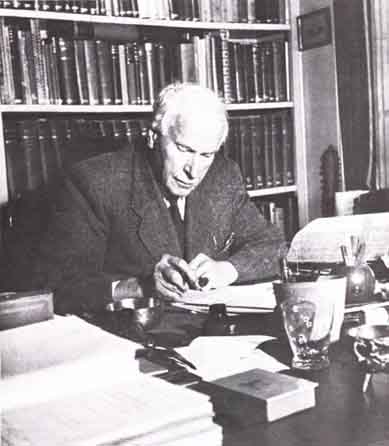
Thanks to Frances today for her informative and thought and discussion provoking presentation on Carl Jung. Here is a link to more information on
Jungian archetypes
Her presentation generated a lot of feedback and personal connections people had with the subject content.
OPINION:
In a psychological battle of wits who wins in your opinion Jung or Freud? And why?
Brian gives us the low down on Freud

Thanks to Brian who gave us a compreshensive summary of the ego, id and superego on Wednesday. He was able to answer questions posed and overall gave us a very informative and helpful overview of the man and his theories. Any comments to add?


Subscribe to:
Posts (Atom)